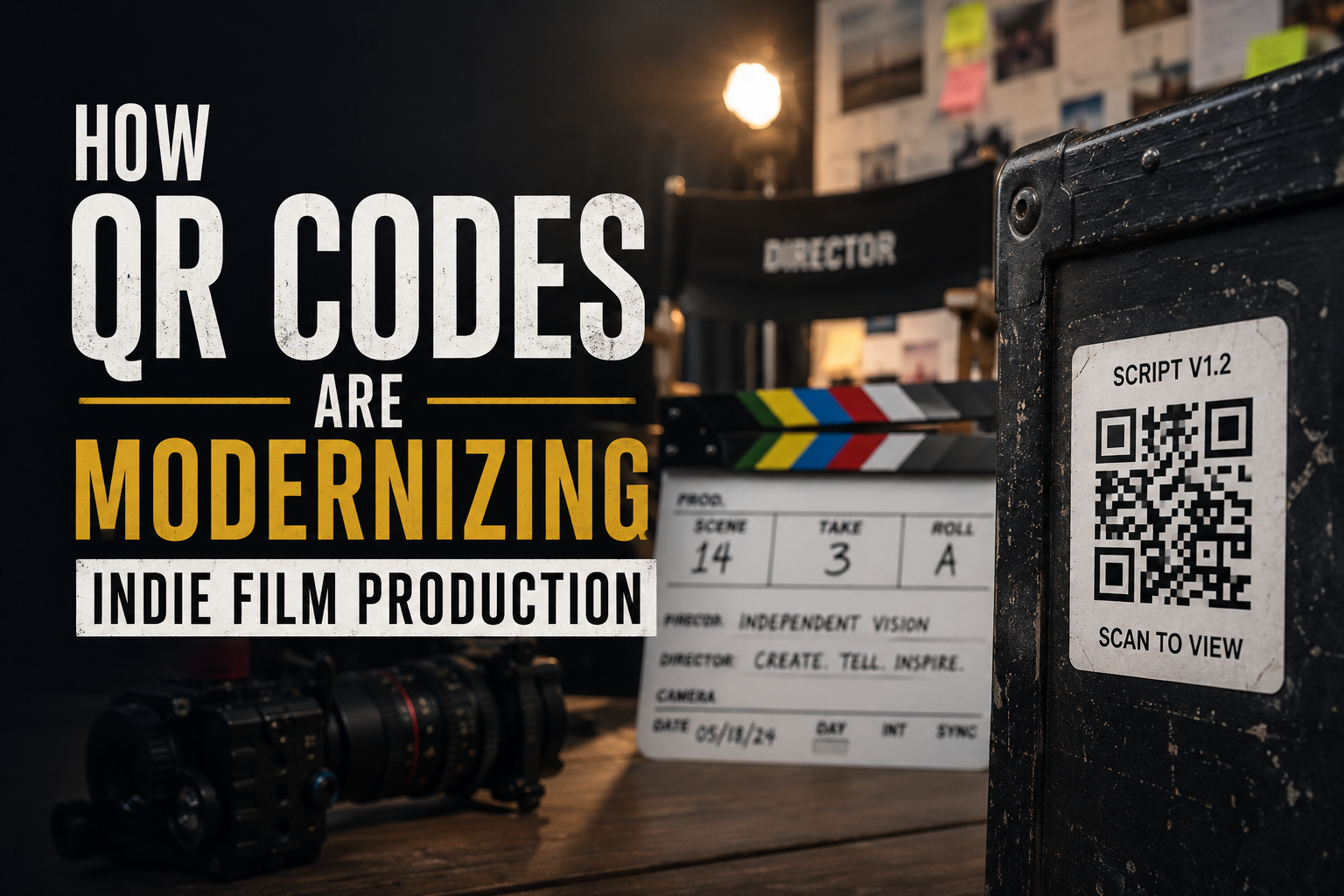

Independent filmmaking has always been a hustle. From securing financing to scouting locations, indie producers wear a dozen hats before a single frame is shot. But over the past few years, a quiet revolution has been reshaping how these projects come together. Digital tools, from QR codes to interactive tax incentive maps, are replacing the binders, spreadsheets, and phone calls that once defined pre-production. The result is a faster, leaner, and more transparent filmmaking process.
The Paper Problem in Indie Film
Walk onto any film set and you will still find stacks of paper: call sheets, location agreements, vendor contracts, and budget printouts. For large studio productions with dedicated production offices, this is manageable. For indie crews working with skeleton teams, it becomes a bottleneck. Documents get lost, versions conflict, and critical information sits in someone’s email inbox when it should be in everyone’s hands.
This is where the first wave of digital tools made its mark. Cloud storage and shared drives helped, but they still required people to know where to look. QR codes changed that equation entirely by turning any physical surface into an instant access point for digital information.
How QR Codes Are Showing Up on Film Sets
Indie producers have started embedding QR codes into their daily workflows in surprisingly practical ways. A QR code printed on a call sheet can link directly to a digital version with real-time updates, so when a location change happens at midnight, the morning crew scans and sees the latest info instead of relying on a printout from the night before.
Location scouts are placing QR codes on physical scouting reports that link to photo galleries, GPS coordinates, and permit status pages. Equipment managers attach them to gear cases so crew members can scan to check availability or report issues. Some productions even use QR codes at wrap to link cast and crew to digital surveys or feedback forms, replacing the paper forms that rarely got returned.
The beauty of this approach is its simplicity. There is no app to download, no login to remember, and no training required. Anyone with a smartphone camera can access the information instantly.
The Tax Incentive Puzzle
While QR codes solve the logistics problem on set, another digital tool revolution is happening in the producer’s office, specifically around one of the most important financial decisions in indie film: where to shoot.
Film tax incentives vary dramatically across the United States. Some states offer credits exceeding 30% of qualified spending, while others offer nothing at all. The difference can mean hundreds of thousands of dollars on even a modest budget. Traditionally, figuring out which state offers the best deal meant hiring a tax consultant, reading through dense government program guides, or relying on outdated comparison charts.
Why This Matters for Indie Budgets
For a film with a $1,500,000 budget, choosing the right state can mean an additional $250,000 or more coming back through tax credits. That is money that can fund post-production, marketing, or simply keep the production from going over budget. But the headline rate is not the whole story. Minimum spend requirements can disqualify smaller productions entirely. Some programs cap their total annual allocation, meaning that by the time you apply, the funds may already be committed.
The Bigger Picture: A Connected Production Workflow
What makes this moment interesting is not any single tool in isolation. It is how these tools are starting to connect. A producer might use an interactive map to choose their state, generate a preliminary budget with the tax credit factored in, share that budget with investors via a QR-coded link in a pitch deck, and then use QR codes on set to manage the daily logistics of the shoot itself.
Each piece removes a layer of friction. The interactive map replaces the tax consultant call. The QR code replaces the email chain. The digital call sheet replaces the paper stack. None of these tools is revolutionary on its own, but together they represent a genuine shift in how indie films get made.
What to Expect Next
AI-powered film scheduling and budgeting tools are already entering the market, automating tasks that used to take assistant directors days to complete manually. As these tools mature and integrate with each other, the gap between the resources available to studio productions and those available to independents will continue to narrow.
For indie filmmakers, the takeaway is straightforward: the tools available today can save you real money and real time. Whether it is a QR code on a call sheet or a tax incentive map that replaces hours of research, the digital modernization of film production is not a future trend. It is happening now, and the producers who adopt these tools early are the ones stretching their budgets the furthest.